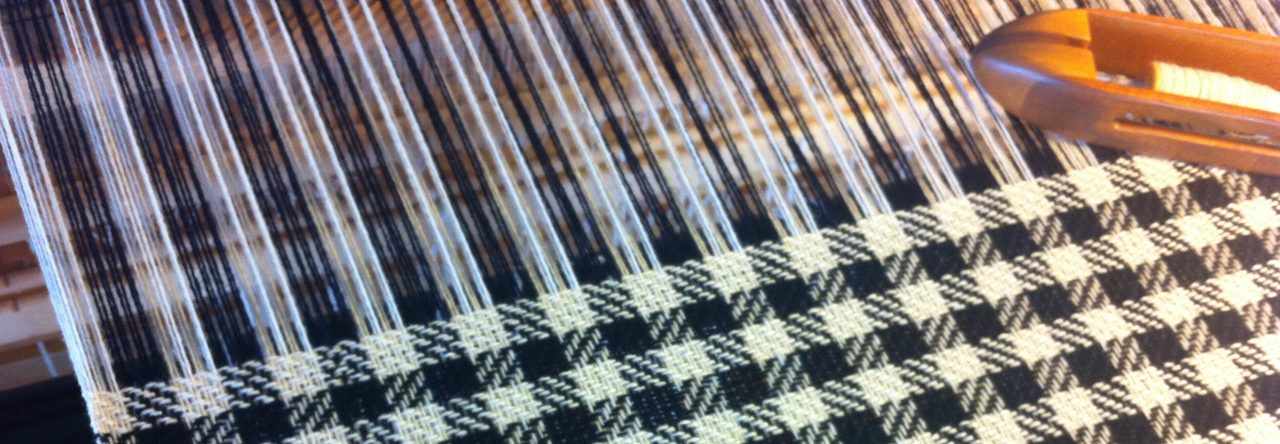
As archaeologists uncovered bog bodies in Northern Europe dating to the Bronze Age and Iron Age, there was quite a variety of clothing found on the bodies, often very well preserved. Evidence of woolen garments was widespread, along with animal hides and plant fibres such as linen. The acidic bog environment presents a preservation bias however, with some materials surviving better than others. Wool and animal skins, for example, are more visible than the fragile bast fibers like linen and nettle, which tend to disintegrate over time.
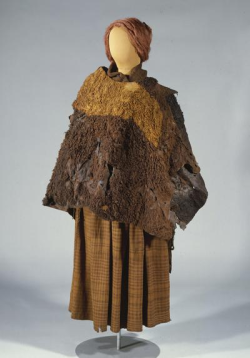
It’s clear from the archaeology that wool was a popular textile during this era. The Huldremose Woman from Denmark was found wearing a checked woolen skirt and shawl and the body has been dated to 350 BCE.

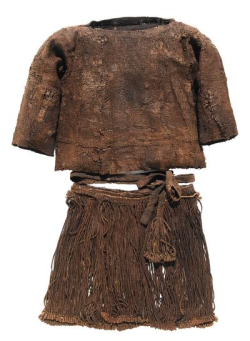
The Egtved girl, dated to the Nordic Bronze Age as early as 1370 BCE, was wearing a short-sleeved woolen blouse with a rectangular piece of cloth gathered with a belt to form a skirt.
Animal hides were another valuable and widely available material. Being both durable and protective, it has been found in hats, belts and leather capes. For example the Tollund Man, dating from around 400 BCE, was found with a sheepskin cap. And the Osterby Man from first century Germany, had a wide cape made of deerskin strips sewn together.
Plant fibre was less likely to be preserved in the acidic environment of the bogs, but there are some signs. Traces of the Huldremose Woman’s undergarment suggest that it was made of either linen or nettle.
There is also evidence of the cloth being dyed blue with woad, and yellow with saffron. This dyed yarn allowed for the weaving of both solid-coloured items, like the blue leg wrappings found in Søgårds Mose in Denmark, and also colourful checked cloth – a popular Celtic and Germanic fashion in this period.
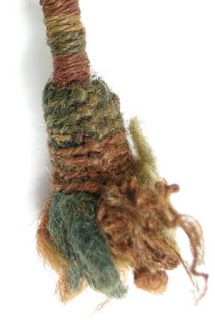
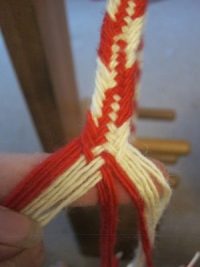
Some garments were also ornamented. One of the oldest bog bodies ever found in Europe is the Emmer-Erfscheidenveen Man, dated to the Bronze Age sometime between the 12th and 14th centuries BCE, and he was found with decorative embroidery along the hem of his undergarment. In Skjoldehamn in Northern Norway, a woman’s belt was found with ornate tassels which have survived in excellent condition.
As new avenues of scientific analysis have been developed, many of these remains are now being re-examined to provide new insight and more accurate dating of the human remains, textiles and animal skins. In many cases garments are also being re-created by modern weavers and crafters to help us visualize their original condition, such as with the Huldremose woman and Egtved girl’s clothing in the National Museum of Denmark.
And finally, new approaches including 3-D scanning, 3-D modelling, and virtual and augmented reality are all allowing delicate fibres to survive in digital form when the physical remains continue to deteriorate over time.
References
Denmark National Museum:
A thread to the past, the Huldremose woman revisited, Gleba and Mannering: https://1drv.ms/b/c/e5666ef7c17e2ae8/EbasAwNFhbxCsYySWN7K8WsBSkjhkHZXImiqbkOameitZg?e=a9MFft
Clothing and hairstyles of the bog people: https://archive.archaeology.org/online/features/bog/clothing1.html
Reconstruction of the Egtved girl’s clothing:https://www.academia.edu/35631058/ATR59_Making_af_reconstruction_of_the_Egtved_clothing_pdf
Skjoldehamn belt tassels:
https://bookeofsecretes.blogspot.com/2017/10/to-make-tassels-for-skjoldehamn-belt.html
https://www.academia.edu/27845585/A_Viking_Belt_based_on_the_Skjoldehamn_Find
Dating Danish textiles and skins: https://www.sciencedirect.com/science/article/abs/pii/S0305440309003434#preview-section-abstract
Digital restoration and reconstruction of heritage clothing: a review: https://www.nature.com/articles/s40494-024-01349-4
Images
https://www.academia.edu/27845585/A_Viking_Belt_based_on_the_Skjoldehamn_Find
https://bookeofsecretes.blogspot.com/2017/10/to-make-tassels-for-skjoldehamn-belt.html
 Celtic Weaving